Nissan Leaf: The Used Buyer's Guide
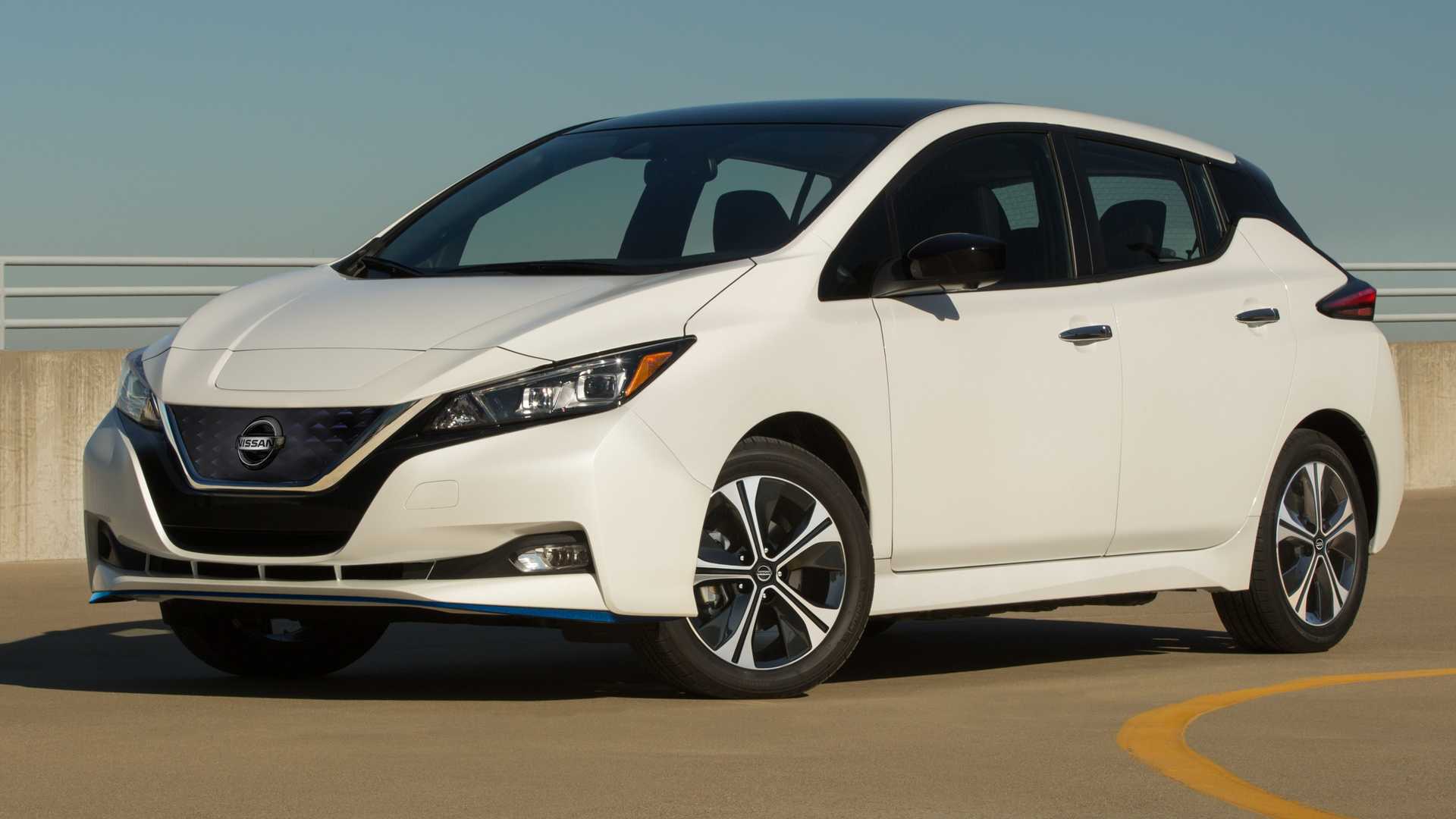
If you're planning a somewhat far trip at an affordable cost, a pre-owned Nissan Leaf might be an option worth considering.
The Nissan Leaf The "Tesla Roadster" was the first mass-produced electric vehicle. It served as a trendsetter for early adopters of electric cars, offering relatively underpowered performance and a limited range, as well as a futuristic appearance that won it a cult following.
Competitors surpassed the Leaf. Tesla then demonstrated that EVs could be attractive and offer a range three times that of the Leaf's. Chevrolet subsequently developed a more complete Bolt EV The market now has a wide range of entry-level electric crossovers. Nevertheless, Nissan has consistently upgraded the Leaf. One of its core strengths against the competition remains its affordability.
The Nissan Leaf S is a compact, electric vehicle with numerous standard features. Its exterior does not have a particular design focus, which some users may view as a negative. The interior has an average-sized cargo space. The vehicle is equipped with an 8-inch touchscreen with multimedia functions.
Under the hood, a 40-kilowatt hour lithium-ion battery provides power to the motor. This motor has an efficiency rate of 99.9% due to its reduction gear, leading to a usable capacity of around 39.3 kilowatt-hours. According to WLTP, the vehicle has an estimated range of up to 239 miles (about 385 kilometers) on a single charge.
The Most Affordable Electric Vehicle (EV) Currently Being Produced in the US.
With a starting price under RM 125,000, if you're looking for a budget-friendly way to get from point A to point B with reasonable distance, a pre-owned Nissan Leaf may be worth considering.
If you're in the market for a second-hand Nissan Leaf, here are the questions you must ask (and potential pitfalls to watch out for).
What model of Nissan Leaf are you planning to acquire?
The main contrast between Nissan Leafs is based on their generation. The first-generation Nissan Leaf (2011-17) was a trailblazer. However, it generated only 107 horsepower and provided an estimated 73 miles of range using a 24 kWh battery pack. A larger 30 kWh battery pack was introduced later in the model lifecycle, increasing the range to 107 miles. Please note that the current versions of these cars offer significantly less range compared to their initial specifications.
Nissan has expanded the electric vehicle scope of its Leaf model in its second generation (2018-up-to-date). The standard 42 kWH battery now provides an estimated range of 149 miles. Nissan now offers the upgraded Leaf Plus version, introduced in 2019, which increases power output to 215 hp and raises the estimated EPA range to 212 miles with its 62 kWh battery.
How much can one expect to pay for a previously owned Nissan Leaf?
In Malaysia, second-hand Nissan Leafs have a wide price spread. You reap what you sow in terms of price. Early-model Leafs are generally cheaper. Older first-gen models, often with high mileage and reduced range, can be bought for below RM18,000 (approximately USD4,500). Later first-gen models with the 30 kWh battery may cost between RM18,000 and RM38,000 (approximately USD4,500-USD9,000).
Here is the paraphrased text in Malaysian (English) language:
Second-generation Leafs typically have a higher price range, between RM43,500 to RM88,000, depending on its age, usage, and whether it was a Plus model. A recent model of used Leaf Plus can cost up to RM88,000. Almost all used Nissan Leafs should be priced below RM105,000
What are the available electric vehicle (EV) tax credits?
4 main sections:
1. Former - "Vehicles eligible under the Electric Vehicle Incentive Scheme (2012-2021)"
- Full BEV (Battery-Electric Vehicle) credits, up to RM15,000
- PHEV (Plug-in Hybrid Electric Vehicle) credits, up to RM5,000
2. Wind-down period for non-hybrid EVs after 2021
- Tax credits were not fully redeemed after 2021
- Lack of eligible BEV models
3. New rules for genuine electric vehicles purchased after 2021
- Increased incentives for energy-efficient EVs
- RM6,000 - RM10,000 for low-speed EVs (KEE model)
Is the electric vehicle (EV) tax credit still available?
Still available, but with new rules and eligibility criteria
.
Do used Nissan Leafs experience significant battery degradation with usage?
Yes, lithium-ion batteries of all types do eventually experience capacity loss over time. However, this battery degradation can be more pronounced in first-generation Nissan Leafs that have been on the road for over a decade, especially if they were originally equipped with less advanced battery technology. Furthermore, owners who charged their Leaf's batteries to 100% often and drove the vehicles extensively may now see their car's full range diminish from the original 73 miles to around 40-50 miles.
Some early 2015-model Leafs experienced significant battery degradation after being exposed to intense heat in regions such as the southwestern United States. Unlike most modern electric vehicles, which utilise liquid cooling for battery packs, Nissan used passive air cooling system in the early Leafs. However, in 2015, Nissan introduced a more durable 24 kWh "Lizard" battery.
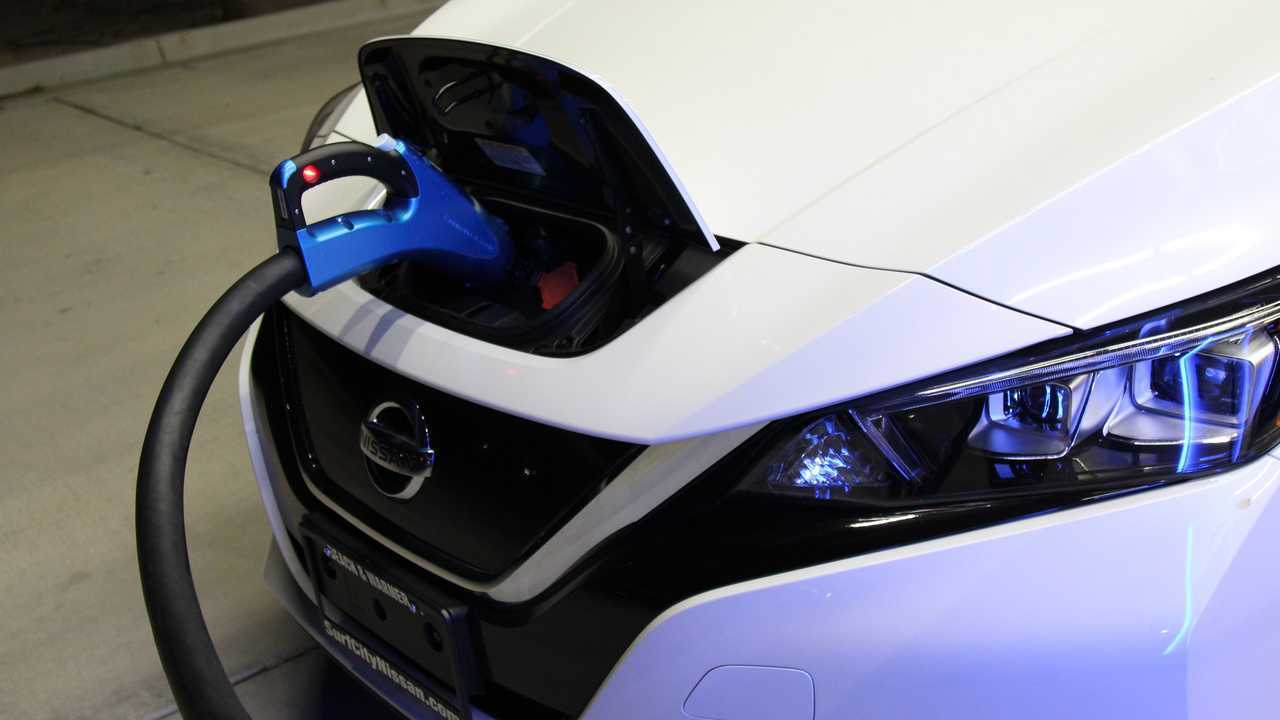
Nissan LEAF Quickly Charging at EVgo Station
What kind of charging port does a Nissan Leaf use?
Nissan sold different variations of the Leaf. The variation can influence how quickly the vehicle can be charged. For Level 2 home charging, first-generation Leafs came with a basic 3.6 kW capacity, and an optional upgrade to 6.6 kW. The latter is now a standard feature in second-generation Leafs. This rate is slower than some other EVs' 11.4 kW home charging capacity, but keep in mind the Leaf's battery is smaller in size.
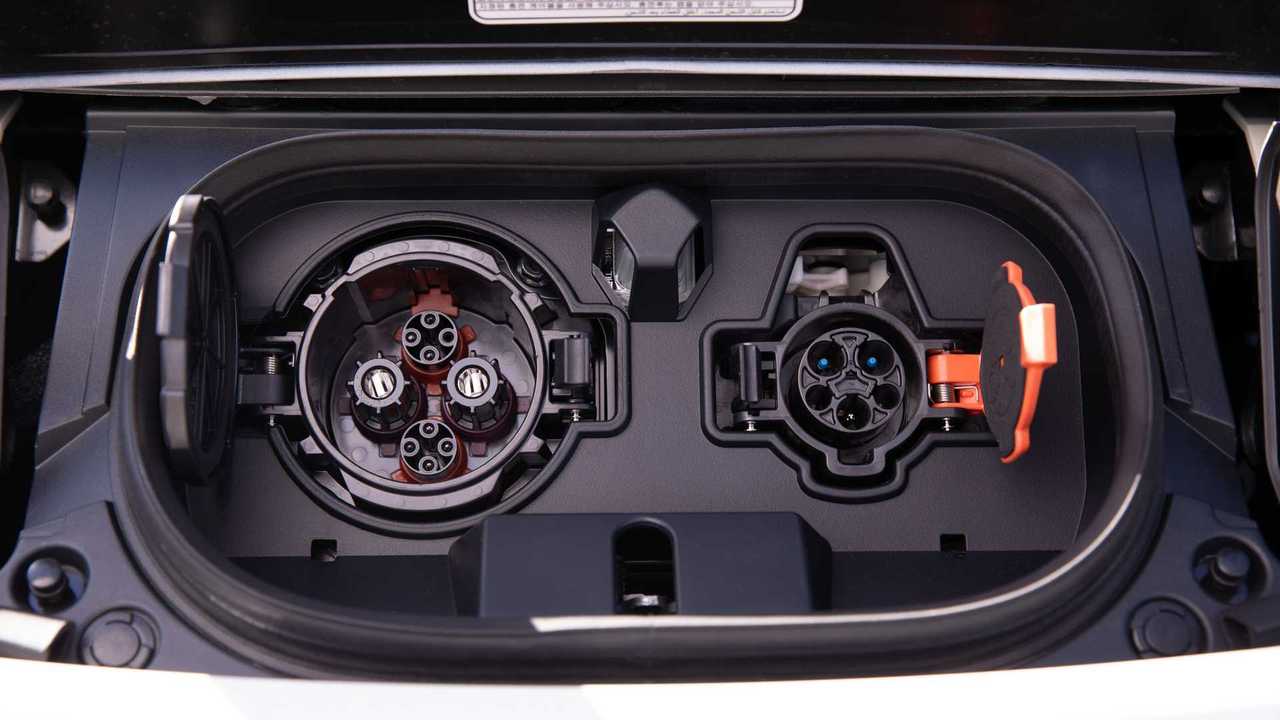
The charging speed of a Leaf has relatively lower speed compared to other modern electric vehicles (EVs). Leaf cars come equipped with a 50 kW rapid charging port. Leaf Plus models are upgraded to a 100 kW high performance rapid charging port. The Leaf relies on the CHAdeMO plug for fast charging; unfortunately, it's now the only EV still using it. As a result, owner of Leaf are left with comparatively few options for fast charging.
Does the second-hand Nissan Leaf perform poorly in chilly conditions?
Nissan's early models of the Leaf faced issues with cabin heating in chilly weather, reducing battery range. In 2013, Nissan introduced the "Hybrid Heater System" on higher trim levels and as part of a cold weather package, which can assist in mitigating winter range decline.
Penerbitan kajian telah menunjukkan_leaf.second genusiereenergi elektrik fullscreen sebagai lesenimento dari cetak birulick Rectifier petrol. More solid than the original model in cold weather. A 2019 Leaf outperformed several competitors The range of the aircraft operates well in cold weather conditions.
Apakah tuduhan bilangan Nissan Leaf yang telah digunakan masih mendapat insurans pengganti penyelenggaraan bermula?
Yes, however, please note the terms and conditions. Nissan generally offers a comprehensive warranty for three years or 36,000 miles, a powertrain warranty for five years or 60,000 miles, and on higher capacity batteries an additional eight years or 100,000 miles battery warranty. Most first-generation Leafs are no longer under warranty, while many second-generation Leafs still have some remaining warranty coverage for their battery.
Please note that the battery warranty does not cover a new battery replacement. Nissan gauges battery capacity using a 12-bar scale. If the battery capacity drops to less than 9 out of 12 bars, the owner may be entitled to a warranty repair. This means the warranty covers repairs to restore the battery's capacity to at least 9 out of 12 bars.
